


Augusta Precious Metals
Education-first · High ratings
Converting retirement assets into gold or silver usually means a direct transfer into a self-directed precious metals IRA, not a taxable sale. This guide covers gold vs silver IRAs, purity (.995 / .999), storage, fees, and when physical metal beats ETFs like GLD or SLV.
Compare fees, minimums, and promos while you plan a rollover or trustee-to-trustee transfer.
| Rank | Company | Rating | Fees | Minimum | Offer | Action |
|---|---|---|---|---|---|---|
| #1 | Low transparent fees | $50,000 | Free education + onboarding | |||
| #2 | Competitive annual fees | $25,000 | Popular free kit | |||
| #3 | Flexible fee options | $10,000 | Lower minimums | |||
| #4 | Standard custodian fees | $20,000 | IRA & physical options | |||
| #5 | Setup often waived* | $10,000 | Fast account setup |


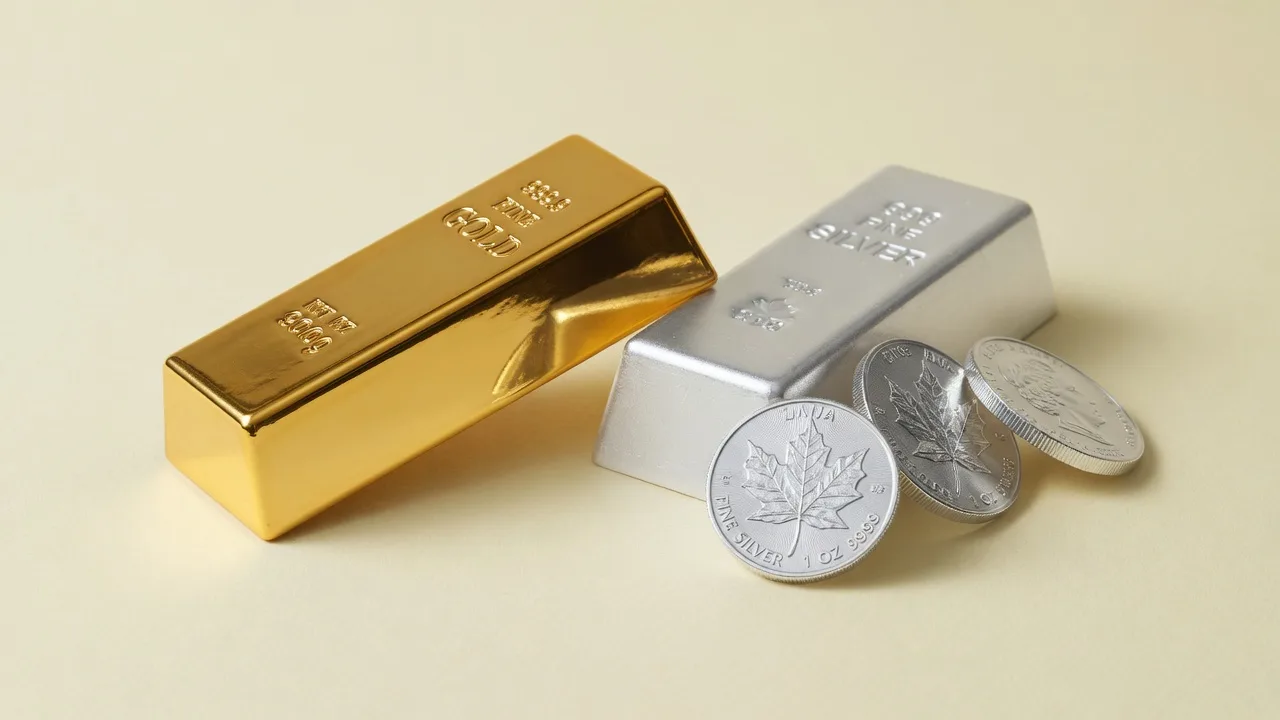
Converting an IRA to gold or silver means reallocating retirement dollars into IRS-approved physical metals inside a self-directed IRA—not liquidating into a taxable personal sale. Investors convert when they want tangible assets that may respond differently than stocks and bonds during inflation or geopolitical stress, while keeping traditional tax deferral or Roth tax treatment intact.
A conversion is really two decisions: (1) how you move money (direct transfer/rollover vs. risky indirect 60-day path) and (2) how you split purchases between gold and silver under IRS fineness and product rules. Silver’s lower price per ounce can mean more premium percentage and more storage bulk; gold is denser value but still carries dealer spreads.
Conversion does not require moving 100% of your retirement savings. Many investors allocate a defined slice to metals and leave diversified funds in a conventional IRA or 401(k).
A gold ira is a specific type of self directed ira that holds physical precious metals instead of only traditional securities. With a gold ira or silver ira, you can hold gold or silver bullion coins and bars that meet specific purity standards set by the IRS. You cannot store these metals at home; they must be housed in an IRS approved depository through a reputable custodian. While standard iras are often opened at a brokerage account for paper assets, a self directed gold ira is designed for storing physical assets under strict custody and reporting rules. You still enjoy potential tax benefits similar to a traditional ira or roth ira, depending on account type and contribution limits, but you must follow unique compliance steps to avoid a taxable distribution.

Investing in precious metals can complement your broader retirement portfolio by adding non-correlated assets to your investments. Gold, silver, platinum, and palladium have historically acted as ballast when stocks or bonds are under pressure. Investors often convert their ira funds to physical metals when they want long-term protection, potential inflation hedging, and a store of value that is not dependent on any single company’s balance sheet. For many investors, the decision to convert your ira balances toward gold or silver is part of a retirement strategy focused on risk management and portfolio diversification rather than short-term speculation.
The IRS lets your gold IRA hold physical gold, silver, platinum, and palladium only when those metals meet strict fineness and product rules under IRC §408(m). Gold bullion bars and most coins must meet .995 (99.5%) minimum fineness. Silver must meet .999 (99.9%). Platinum and palladium generally require .9995 (99.95%). Products from recognized refiners and government mints with proper hallmarks and assay documentation are the ones custodians accept.
American Eagle gold coins are the major exception: they are about .9167 fine (22-karat) yet Congress expressly allows them in IRAs under IRC §408(m)(3)(A). Canadian Maple Leafs, American Buffalo coins, Austrian Philharmonics, and many LBMA Good Delivery bars that meet fineness also commonly qualify. Your dealer and custodian should confirm eligibility before you place an order.
The IRS prohibits numismatic and collectible coins, rare proof sets marketed for “collector premium,” and jewelry inside an IRA, even if the metal content is high. Buying non-qualifying coins can cause the IRS to treat the purchase as a distribution, creating income tax and possible penalties. Stick to bullion-oriented, IRS-approved inventory and keep the paperwork that proves fineness and provenance.
For silver-heavy conversions, prioritize .999 fine bullion coins and bars the custodian lists as IRA-eligible. For gold-heavy conversions, mix .995+ bars with allowed government coins such as American Eagles. Keep a product list from your dealer that matches custodian eligibility before funds leave the old IRA.
When you move retirement money into a gold IRA, choose a direct trustee-to-trustee transfer (or direct rollover) over an indirect rollover whenever possible. In a direct transfer, your existing IRA or 401(k) plan sends cash or assets straight to your new self-directed IRA custodian. You never take personal possession of the funds, so the IRS does not treat the move as a taxable distribution, and the amount does not count against your annual contribution limit.
An indirect rollover is different: the plan issues a check to you (often after 20% mandatory federal withholding on employer plans). You then have exactly 60 days to deposit the full gross amount into your gold IRA. If you miss the 60-day window—or redeposit only the net check without replacing the withheld taxes—the IRS can treat the shortfall as a taxable distribution and apply a 10% early withdrawal penalty if you are under age 59½. Most investors complete only one IRA-to-IRA indirect rollover per 12-month period under the once-per-year rule; direct trustee-to-trustee transfers are not limited that way.
For a former employer 401(k), 403(b), or TSP, request a direct rollover payable to the gold IRA custodian for your benefit. For an existing brokerage IRA, instruct a custodian-to-custodian transfer. Either path keeps the gold IRA transfer tax-free when you follow the paperwork and leave the money inside the IRA system.
When your goal is “convert IRA to gold or silver,” language on forms should request a transfer or direct rollover to a self-directed IRA, not a cash distribution. After cash settles, place metal orders through the IRA—never buy coins personally and try to “contribute” them in-kind without custodian approval and eligibility checks.
Use this conversion sequence to move from a conventional IRA or old 401(k) into physical gold and silver.
Expect roughly $200–$500 in first-year gold IRA costs and about $150–$350 per year ongoing, before dealer premiums on the metals themselves. Concrete ranges investors typically see:
Company minimums often run from about $10,000 to $50,000 depending on the dealer. A $50,000 first purchase can mean $1,500–$4,000 of combined first-year drag when you add premium plus fees—so compare total cost of ownership, not just the setup line item. Ask for a written fee schedule covering wire fees, transaction fees, termination fees, and storage type before you fund the account.
Silver conversions can show higher percentage premiums on small coins; gold bars often show tighter spreads per dollar invested. Model both metals’ round-trip costs (buy premium + sell spread + annual storage) before you pick an allocation.
Allocation decisions depend on your investment goals and risk tolerance. Many investors start with a core of gold because of its liquidity and deep global market, then add silver for potential upside and industrial demand. Some investors include platinum or palladium in smaller allocations because these metals can be more volatile and are heavily influenced by industrial trends. Within gold or silver, you may consider a mix of bullion coins and bars for flexibility. Coins can offer easier liquidation, while larger bars may reduce per-ounce premiums. Ensure every item is eligible under IRS rules and documents are retained by your custodian for your ira account.
To hold gold silver platinum and palladium in your ira, each product must meet IRS purity standards. Many bullion coins and bars from recognized mints and refiners qualify, but collectible or numismatic coins typically do not. Your custodian and dealer should verify eligibility. This step is essential to prevent a prohibited investment that could trigger a taxable distribution.
For 2026, the IRS allows you to contribute up to $7,000 to your IRAs combined—or $8,000 if you are age 50 or older under the catch-up provision. That annual limit applies across every traditional and Roth IRA you own, including a gold IRA; it is not $7,000 per account. Rollovers and trustee-to-trustee transfers from a 401(k), 403(b), TSP, or existing IRA are not contributions and have no dollar cap when completed correctly.
SEP gold IRAs follow separate employer-contribution rules (generally up to 25% of compensation or the annual SEP dollar cap). Always verify the current IRS Publication 590-A figures before you write a check. If you exceed the annual contribution limit, the IRS can assess a 6% excess-contribution tax for each year the excess remains in the account—so track new money carefully even when you fund most of the gold IRA with a large rollover.
Funding hierarchy most investors use: (1) direct rollover of old plan balances for size, (2) annual $7,000/$8,000 contributions if earned income allows, (3) optional Roth conversion strategy only after you model the tax bill. Your gold IRA custodian reports contributions on Form 5498 each year so the IRS sees the correct contribution total.
On a traditional gold IRA, you generally begin required minimum distributions (RMDs) at age 73; taking money before age 59½ usually triggers ordinary income tax plus a 10% early-withdrawal penalty unless an exception applies. You can satisfy an RMD by selling metal inside the account for cash or by taking an in-kind distribution of coins or bars. Either way, the fair market value counts as taxable income on a traditional account and appears on Form 1099-R.
Your custodian also files Form 5498 to report contributions, rollovers, and year-end fair market value—critical when metals are the underlying assets. Roth gold IRAs do not require RMDs for the original owner during life, and qualified Roth withdrawals can be tax-free if you meet the age and five-year tests.
Plan distributions early with your custodian so you do not miss an RMD deadline (missed RMDs can draw a steep IRS penalty). If you take metal in-kind, document the valuation date and retain depository release records; the IRS treats that FMV as the distributed amount even if spot moves the next day.
Many investors search for how to convert their IRA to gold at Wells Fargo or through Fidelity because they already hold accounts at these institutions. The key fact: Wells Fargo and Fidelity do not offer self-directed IRAs that hold physical gold or silver bullion. Both are traditional custodians that support stocks, bonds, ETFs, and mutual funds only.
However, you can transfer your existing Wells Fargo IRA or Fidelity IRA tax-free to a specialized self-directed IRA custodian. The process is a trustee-to-trustee transfer — your current custodian sends funds directly to the new one, with zero taxes and zero penalties. Fidelity does offer gold ETF exposure (like GLD or IAU) if you prefer not to open a new account.
Understanding the difference between a Gold IRA and owning physical gold outside a retirement account is essential before you decide how to convert your IRA to gold or silver.
| Factor | Gold IRA | Physical Gold (Outside IRA) |
|---|---|---|
| Tax treatment | Tax-deferred (Traditional) or tax-free growth (Roth) | 28% collectibles capital gains tax on sale |
| Storage | IRS-approved depository required by law | Home safe, bank vault, or private storage |
| Annual fees | $150–$500 per year (custodial plus storage) | $0 home storage; safe deposit box $50–$200 per year |
| Access | Restricted until age 59.5 to avoid early withdrawal penalty | Immediate access at any time |
| Best for | Long-term retirement savings with full tax advantages | Liquid wealth outside retirement accounts |
Conclusion: A Gold IRA is the superior choice for converting existing tax-advantaged retirement funds (IRA or 401k) because it preserves your tax benefits and shelters growth from current taxation. Physical gold outside an IRA is better for investors who want immediate access or who are investing taxable savings rather than retirement funds.
Selecting a reputable custodian and a reliable precious metals dealer is the backbone of a successful precious metals ira. Here’s what to evaluate:
Experience with precious metals iras: Ensure the gold ira company or custodian regularly handles compliant transactions and reports to the IRS correctly.
Transparent fee structure: Ask for all fees in writing, including flat rates, asset-based fees, and storage fees. Avoid surprises and higher fees hidden in fine print.
IRS approved depository partners: Verify where your metals will be stored and the insurance that protects your account.
Customer service: Look for responsive support to guide the rollover process and investments in metals.
Dealer credibility: Choose a precious metals dealer with a strong track record, competitive pricing, and clear buyback policies.
No investment is risk-free. Consider the following before you invest ira funds in physical metals:
Price volatility: Gold and silver can fluctuate. Plan for long-term holding rather than short-term trading.
Liquidity and premiums: Bullion coins are widely recognized; bars can have lower premiums per ounce but may be harder to sell in certain sizes.
Fees: Custodial and storage fees reduce net returns. Compare providers to manage costs.
Concentration risk: Balance metals with other assets like stocks and bonds to build a resilient retirement portfolio.
Compliance risk: Follow IRS rules to avoid prohibited transactions, self-dealing, or personal storage that could lead to penalties.
Most investors maintain diversified allocations across assets. Precious metals may serve as a complement to stocks and bonds, potentially reducing overall volatility and adding a hedge against currency risks. If you hold a large percentage of equities in a brokerage account, using a self directed ira to hold gold or silver can offer balance. Align the percentage of metals with your investment goals and time horizon, then rebalance periodically to maintain your target mix as markets move.
Investors often convert their ira to precious metals when they are concerned about inflation, geopolitical events, or overexposure to paper assets. Converting a portion of your ira account rather than the entire balance is common. A measured allocation may allow you to capture diversification benefits without giving up growth potential from equities. Always weigh your personal circumstances, retirement timeline, and risk tolerance before you transfer funds to a self directed ira for physical metals.
Start with a call to a reputable custodian who specializes in precious metals iras.
Confirm that your metals will be stored in an IRS approved depository with appropriate insurance.
Keep records of all transactions, including invoices for coins and bars, to validate purity standards and eligibility.
Ask for a written breakdown of fees, including storage fees, administration, and shipping, to ensure a transparent fee structure.
Avoid an indirect rollover unless necessary; choose a direct rollover or a custodian-to-custodian transfer.
Review contribution limits and any plan-specific rules for your individual retirement account.
Coordinate with your tax professional to understand any need to pay taxes on conversions and to maintain compliance with IRS rules.
Popular conversion targets include American Gold and Silver Eagles, Canadian Maple Leafs, and investment-grade bars that meet IRS fineness. Gold bars should meet .995 minimum fineness from recognized refiners; silver bars and rounds for IRAs should meet .999. Platinum and palladium can diversify further if they meet .9995 standards and your custodian accepts them.
Avoid proof collectibles sold primarily for rarity premiums, private-mint “commemoratives” without IRA approval, and any product the custodian will not vault. If a salesperson emphasizes collectibility over bullion content, pause—the IRS numismatic prohibition is a conversion red flag.
Gold and silver do not produce cash flow like dividends or interest, but they can serve as a long-term store of value. Over some periods, metals have outperformed stocks; over others, they have lagged. Investors who convert their ira to gold or silver should set realistic expectations: metals can cushion against inflation and systemic risks, but they are not guaranteed to rise at all times. Long-term planning and discipline matter more than short-term price swings.
Your gold IRA custodian must place IRS-approved metals in a qualified depository—investors cannot store IRA gold at home or in a personal safe-deposit box without risking a prohibited transaction. Leading depositories used in the industry include Delaware Depository and Brink’s (and similar vault operators). The custodian ships metal from the dealer straight to the vault so chain of custody stays inside the IRA structure.
Segregated (allocated) storage keeps your specific bars and coins identified—often by serial number—separate from other clients’ metal. Commingled (non-segregated / unallocated) storage pools like-kind bullion; you own a claim on weight and type rather than a particular bar. Segregated storage usually costs more; commingled storage is cheaper but may deliver equivalent metal, not the exact serials you bought, at distribution.
Confirm insurance coverage, audit frequency, and whether storage is domestic. When you later take an in-kind distribution or sell, the depository and custodian coordinate release or liquidation. Keep annual statements that list holdings, storage class, and fees so your personal records match Form 5498 fair-market-value reporting.
After conversion, review annual statements against Form 5498 FMV. If you later convert traditional metals IRA assets to Roth (a Roth conversion), expect a taxable event on the converted amount reported via Form 1099-R—even though metals never leave the IRA system until distributed.
A gold IRA must avoid prohibited transactions under IRC §4975. If you take personal possession of IRA metals or use them as loan collateral, the IRS can treat the account as distributed — creating ordinary income tax on the full balance plus a 10% early-withdrawal penalty if you are under 59½. You become a disqualified person when you self-deal with IRA property.
So-called “home storage gold IRAs” and checkbook LLC schemes marketed as personal vaulting frequently fail IRS standards. Your custodian must arrange shipment to an IRS-approved depository (examples used in the industry include Delaware Depository, Brink’s, and IDS). Keep assay/hallmark documentation with custodian records.
Related filings: custodians report contributions and year-end fair market value on Form 5498 and distributions on Form 1099-R.
Use a direct trustee-to-trustee (custodian-to-custodian) transfer whenever possible. Funds move between institutions without passing through your personal account, generally avoiding the 60-day deposit deadline and the one-rollover-per-12-months limit that applies to many indirect IRA rollovers.
An indirect rollover sends a check to you. You typically must redeposit 100% within 60 days or the shortfall becomes taxable. Employer plans (401(k)/403(b)) may withhold 20% on eligible rollover distributions paid to you — another reason direct transfers are preferred.
SIMPLE IRA note: many SIMPLE plans impose a two-year participation rule before certain tax-free rollovers to non-SIMPLE IRAs. Confirm with the plan administrator before initiating paperwork.
On a $50,000 account, first-year all-in costs commonly land near $600–$1,200 before metal price moves — depending on setup fees, custodial schedules, storage, and dealer spreads.
| Cost layer | Typical range |
|---|---|
| Account setup | $0–$150 one-time |
| Annual custodial / admin | $75–$300 per year |
| Depository storage | $100–$175 per year (segregated often higher than commingled) |
| Dealer premium / spread | ~3–8% over spot on many retail bullion purchases |
| Wire / transfer fees | $0–$50 (varies by banks/custodians) |
Ask every company for a written fee schedule and buyback spread before you transfer funds.
IRC §408(m) treats most collectibles as distributions, with a bullion exception for specified fineness levels produced by approved refiners/mints.
| Metal | Minimum fineness | Common IRA-eligible products |
|---|---|---|
| Gold | .995 (99.5%) for most bars | American Gold Eagle (statutory exception), American Buffalo, Canadian Maple Leaf, LBMA Good Delivery bars (PAMP, Valcambi, etc.) |
| Silver | .999 | American Silver Eagle, Maple Leaf, approved bars |
| Platinum / Palladium | .9995 | Certain Eagles / Maple Leafs meeting rules |
Generally prohibited: jewelry, most numismatic/collectible coins, and many proof products without qualifying bullion status. Confirm product eligibility with your custodian before purchase.
Your gold IRA stores metals at an IRS-approved depository under custodian control. Segregated (allocated) storage keeps your bars/coins identified separately — usually higher cost. Commingled storage pools like metals and is often cheaper.
Industry facilities frequently used with self-directed IRAs include Delaware Depository, Brink’s, and IDS. Request insurance coverage details and whether storage is allocated or unallocated before you fund the account.
Traditional gold IRAs grow tax-deferred; withdrawals are ordinary income. Required Minimum Distributions (RMDs) generally begin at age 73 under current rules. Withdrawals before 59½ usually add a 10% early-withdrawal penalty unless an exception applies.
Roth gold IRAs use after-tax funding; qualified withdrawals can be tax-free and the original owner typically has no lifetime RMDs.
An in-kind distribution ships metal to you and is taxed on fair market value at distribution — reported on Form 1099-R. Beneficiaries should confirm designation forms with the custodian; rules differ for inherited IRAs.
Open a self-directed precious metals IRA and use a direct trustee-to-trustee transfer or direct rollover so the IRS does not treat the move as a distribution. Buying metals after a taxable cash-out—or missing a 60-day indirect redeposit—can create ordinary income tax and a 10% penalty before age 59½.
Gold offers denser value per ounce; silver often costs less per ounce but can carry higher percentage premiums and more storage bulk. Many investors split an allocation. Both metals must meet IRS fineness (.995 gold / .999 silver) or qualify as allowed government coins such as American Eagles.
No—proper rollovers and transfers do not count against the 2026 $7,000 / $8,000 (age 50+) contribution limits. Only new annual contributions from earned income consume that cap across all your IRAs.
Gold generally needs .995 purity; silver .999; platinum and palladium typically .9995. American Eagle gold coins are allowed despite lower fineness. Numismatic and collectible coins are prohibited inside the IRA regardless of metal content.
Budget about $200–$500 in first-year account costs and $150–$350 ongoing, plus roughly 3%–8% dealer premium over spot (sometimes more on small silver). Storage at Delaware Depository, Brink’s, or similar vaults may be flat or percentage-based; segregated storage costs more than commingled.
RMDs still generally begin at age 73. You can sell metal for cash inside the IRA or take an in-kind distribution; the fair market value is taxable on a traditional account and reported on Form 1099-R. Custodians also file Form 5498 for contributions and year-end FMV.
Yes. Partial transfers and rollovers are common and often wiser than an all-in conversion. Move the portion you want in metals via direct transfer, keep the rest in diversified funds, and rebalance as your risk tolerance and fee budget change.
At an IRS-approved depository under your custodian—facilities such as Delaware Depository or Brink’s—not in your home safe. Choose segregated storage for specifically identified inventory or commingled storage for lower-cost pooled bullion.
Converting (more accurately: transferring) into a precious metals IRA can diversify equity risk, but gold and silver pay no interest and carry storage/custodial fees. Use a direct custodian-to-custodian transfer so the move is not a taxable distribution.
Physical gold outside an IRA offers personal possession and no custodial fees, but gains may face collectibles capital-gains treatment. A gold IRA offers tax-deferred or Roth tax-free growth, yet requires an IRS-approved depository and annual fees.
They can be useful as a hedge (typically 5–15% of a portfolio). Silver IRAs require .999 fineness; gold bars generally .995+ (American Eagles excepted). Compare total fees and dealer spreads before converting large balances.
Silver returns vary widely with industrial demand. A $1,000 purchase five years ago would track the change in silver spot (recently near $59–60/oz educational snapshot) minus premiums and any storage costs — always verify current spot and spreads with a dealer.

Alex Rivera, CFP®
Author · Certified Financial Planner

Priya Nair, EA, MST
Reviewer · Enrolled Agent
We rank gold IRA companies on six weighted criteria: (1) fee transparency 25%, (2) IRS-compliance / product menu 20%, (3) buyback policy 15%, (4) minimum investment 15%, (5) custodian & depository partners 15%, (6) verified customer feedback / BBB-BCA record 10%. Rankings are editorially independent of affiliate compensation.
convertiratogoldorsilver.us.com may earn a commission when readers request kits or open accounts via partner links (often labeled “Get kit”). Commissions do not change rankings, scores, or editorial conclusions.
Educational content only — not personalized investment, tax, or legal advice. Verify current fees and eligibility with your custodian and tax professional.
Reader feedback
Independent reader notes from people researching gold IRA companies — not paid endorsements.
★★★★★I rolled over my 401k from my old employer into a gold IRA — the whole process took about 3 weeks. The step-by-step guide here helped me understand exactly what questions to ask the custodian. Allocated $80,000 between gold and silver. Highly professional from start to finish.
★★★★★Was confused about the Wells Fargo to gold IRA transfer process. This site explained the trustee-to-trustee transfer clearly — no taxes, no penalties. I moved $45,000 from my Fidelity account and it was completely tax-free. Wish I had done this 5 years ago.
★★★★★The gold vs silver comparison and the allocation guide helped me decide to go 70% gold and 30% silver. The minimum was $25,000 at the company I chose. Custodian handled all the IRS paperwork. Everything went smoothly.
★★★★★After reading the fee breakdown here I found a custodian with flat $250 per year storage instead of percentage-based fees. For my $60,000 account that saves hundreds per year. The comparison table made it very easy to see which companies offer the best value.